Those of you searching for something larger, faster, and more significant, who feel that if you could just be somewhere else doing something else as somebody else, then you life would really matter- Jesus has come to confound you. I'm not referring to those who need to flee to somewhere else for safety's sake. I am referring to the discontented who have not yet learned what it means that Jesus is our portion and and that he is enough for us. You have wandered far from home. You cannot glorify God by trying to become him… He may just decide to pick you up and carry you to somewhere sexy in order to undo you! He may call you to courageously prize what is overlooked and mundane among those whose cravings for the next and the now might cause them to soon overlook you for another more hip pastor. Or he may call you to nowhere sexy so that you can learn that you can make a difference in Jesus even if you are somewhere forgotten by the world.Oh that we would always remain humble, no matter our position or authority… content, no matter our calling or abilities. May Jesus be our portion and hope… our life lived for His glory alone.

Thursday, September 19, 2013
Jesus Has Come to Confound You
The most humbling thing I ever did was plant a church. The early days of planting carried with it a degree of doubt and insecurity that was unparalleled in my previous 15 years as a pastor. Ironically, I hope I never forget those days. The desperation and dependance I felt was beautiful. My inability to bear fruit and need for God's help was ever before me. In this spirit, I was recently humbled and encouraged by Zack Eswine's words from his new book Sensing Jesus.


Tuesday, September 03, 2013
Church Planting: The Most Impactful Strategy
Here is a classic quote from Dr. Tim Keller from his paper Why Plant Churches written in 2002. I couldn't agree more.
The vigorous, continual planting of new congregations is the single most crucial strategy for 1) the numerical growth of the Body of Christ in any city, and 2) the continual corporate renewal and revival of the existing churches in a city. Nothing else--not crusades, outreach programs, para-church ministries, growing mega-churches, congregational consulting, nor church renewal processes--will have the consistent impact of dynamic, extensive church planting. This is an eyebrow raising statement. But to those who have done any study at all, it is not even controversial.
Monday, September 02, 2013
How to Cultivate Meaningful Relationships in Small Groups
As we planted The Vine three years ago, we desired for it to be a place where honest and authentic community was happening in individual relationships and in our groups. This video reminded me how important it is for those of us who are leaders to set that tone for our groups and churches. If we have any hope of seeing honest and meaningful relationships become a common characteristic in our churches, we have to lead the way.
Friday, August 30, 2013
The Process for Planters
One of my goals over the next 6 months is to work with a task force to fully develop a process for church planters and churches to engage in multiplication within the Forest Lakes District of the EFCA. My progress in that goal will be evident in a growing website dedicated to district multiplication. This week I've added the following information regarding the process for planters desiring to engage in the district. Please feel free to participate by providing feedback. You can read the entire section on the website here.
THE FOUR-STEP PLANTING PROCESS
1. Application and Assessment: This phase includes a preliminary application, the completion of several assessment tools, an interview with a pre-assessment team, and final recommendations from the team regarding your calling and the training conditions necessary for final assessment.
2. Training: The training phase will look different for every prospective planter based upon the recommendations of the pre-assessment team. For some, the training phase could include a residency or internship, for others the reading of books and attending a boot-camp, yet for others it could include specific training in bi-vocational or rural planting methods.
3. Final Assessment: Once the training phase is completed the prospective planter will go through a final assessment process including several surveys and an interview with an assessment team. This phase will provide a final confirmation for the planter candidate, indicating that the training process has been completed and that the specific vision for planting is sound and a good reflection of the leader's gifts and calling.
4. Planting and Coaching: Once the candidate receives final approval he will become an official planter within the EFCA and begin the transition phase into planting. In the first 2-3 years of planting each planter will work with an oversight team and coach in order to provide the support, encouragement, and accountability necessary for successful planting.
THE FOUR-STEP PLANTING PROCESS
1. Application and Assessment: This phase includes a preliminary application, the completion of several assessment tools, an interview with a pre-assessment team, and final recommendations from the team regarding your calling and the training conditions necessary for final assessment.
2. Training: The training phase will look different for every prospective planter based upon the recommendations of the pre-assessment team. For some, the training phase could include a residency or internship, for others the reading of books and attending a boot-camp, yet for others it could include specific training in bi-vocational or rural planting methods.
3. Final Assessment: Once the training phase is completed the prospective planter will go through a final assessment process including several surveys and an interview with an assessment team. This phase will provide a final confirmation for the planter candidate, indicating that the training process has been completed and that the specific vision for planting is sound and a good reflection of the leader's gifts and calling.
4. Planting and Coaching: Once the candidate receives final approval he will become an official planter within the EFCA and begin the transition phase into planting. In the first 2-3 years of planting each planter will work with an oversight team and coach in order to provide the support, encouragement, and accountability necessary for successful planting.
Thursday, August 29, 2013
Preaching To Non-Believers
I'm not sure how I missed this post back in January when it was originally posted, but this is a really helpful article on how to better engage with non-believers through preaching. The four steps are listed below and the entire article is here.
- Acknowledge and welcome the non-believers in attendance.
- Assume the non-believers in attendance need help in approaching the Bible.
- Challenge non-believers to engage the Bible by acknowledging the oddity of Christian belief and practice.
- Use cultural commonalities to point out worldview inconsistencies.
Wednesday, August 28, 2013
What Color is Your Church Logo?
One of the steps very early in the life of a church plant involves developing a logo. I found this post by Lawrance Chan very interesting when it comes to what your colors communicate about your "brand". Some good food for thought as you make this important decision early in the life of your church plant.


Tuesday, August 27, 2013
Six Challenges of Church Planting
In this article Darryl Dash gives us six challenges of church planting as a follow-up to his previous post on the six blessings of church planting. Both helpful for present and prospective church planters.
Monday, August 26, 2013
Church Planting IS a Gospel Initiative
Steve Timmis, the Director of the Acts 29 Network in Western Europe, reminds us in this video of the root initiative that leads us to plant churches.
Ask Steve: Why is it important to see church planting as a gospel-initiative? from Acts 29 Europe on Vimeo.
Wednesday, August 21, 2013
We Multiply Churches Website Online
Today I worked on stripping down our district planting website to the bare bones and began the rebuilding process. I am looking forward to this site growing to become front door resource for people interested in planting within the district and churches learning how better to participate in the cause of church multiplication. Stay tuned for ongoing updates at www.wemultiplychurches.org.


Monday, August 19, 2013
A Heart for Mission Here and Now
If you're a Christian you've likely experienced a feeling of urgency for the cause of global mission and a sense of apathy in your own life when it comes to being a light of the Gospel in your work, home, and neighborhood. Though we should be passionate for God's global work, we need to also recognize the significant need that is right before us. Now more than ever, we need to adapt a missionary mentality if we have any hopes of making an influence in our present culture. In his book SoulTsunami Leonard Sweet writes:
Only two countries have more non-believers than the US: India and China. The US is the third largest mission field in the world. Unfortunately, our efforts at evangelizing the unchurched have all the pace of a southern summer. Few believers have relationships, much less friendships with non-believers.
Friday, August 16, 2013
Living as a Christian in Culture
If we are faithful in mission as Christians, we are forced to wrestle with what it means to be in the world and yet also distinctly Christian. Our tendency is to live in dualism,"This is my church life and this is my work life." In contrast to this, the Gospel of Jesus should saturate every aspect of how we view and interact with others in our places of work and life in general. Here are some thoughts from Mason King at The Village blog:
The Christian lives under a tension of duality, looking to participate in and benefit from secular culture while simultaneously being called to live according to God’s ways. The common inclination is to keep the two separate.... The believer’s call is to realize that God is at work in culture through common grace, using all things to carry forth His purposes. This changes the triumphant desire to redeem and restore culture through our own efforts to a gospel-centered response to grace. It sends the Christian into the culture to live, as Timothy Keller puts it, “with Christian distinctiveness,” intentionally walking out the implications of the gospel in each arena or role in life.For the whole article click here.
A call to excellence alone would fall short—many people are excellent at what they do but are driven by motives other than the glory of God. Some Christians pursue success in God’s Name and for His glory but trample the tenets of the gospel in their pursuit instead of displaying thoughtful and articulate application of the gospel to their work. The Christian strives to contribute excellence to the culture through a life marked by Christian distinctiveness. This changes the way we interact with our waiter, our co-workers, our boss and our spouse. It changes the motives of our heart from self-centered indulging or protecting actions to God-focused response and praise.
Walking out the implications of the gospel in your daily life takes thoughtful consideration of how the gospel applies to your work, talents, neighborhood and home. Believing lawyers, teachers, artists, nurses and parents exhibit Christian distinctiveness differently due to the inherent nature of their vocation.... Thoughtfulness of action and speech are the fruits of a heart changed by the grace of God in Christ. This heart sees no divide between a secular and sacred world but sees God’s creation that He is working to redeem. This empowers the imagination of a believer to see God’s design for their work and to strive toward its intended beauty in society. When this is the lens of the heart’s vision, we see opportunities to align our lives to God’s ways at every turn. Our behavior shines like the light it is in the dark world around it.
Wednesday, August 07, 2013
National Multiplication Director Announced
 Jeff Sorvik was just announced the new national Director of Church Multiplication for the Evangelical Free Church of America. Looking forward to working with you Jeff!
Wednesday, July 31, 2013
Driscoll on Growing Your Church
Here's a good reminder for existing churches on how to grow your churches influence in the lives of more people by Mark Driscoll, Lead Pastor of Mars Hill Church in Seattle. In it he is referring to "new branches" as people who are new converts or visitors and "old branches" as existing or seasoned members and attenders. The illustration breaks down if you take it too far, but as usual, his thoughts are helpful, especially for pastors who tend to get distracted by managing existing people and problems. One main take away is that it's important to give a portion of our ministry time to build relationships with people who don't know Christ or are newly growing in Him.
Leave room in your schedule to meet with new people and new converts. When you meet folks ask them where they live and if they are at another church just visiting or considering your church. Don’t meet with folks who live elsewhere or are in another church. Do meet with folks in your area who are new to your church. Don’t hand off the visitor assimilation so far down the food chain that you don’t know the new branches and fruit. If you want, tell folks from the front where you will be after church and that you want to meet the new people and give them a gift of a free book. Tell everyone else where to go for prayer and to connect with the old branches. You go somewhere else. Welcome new folks joyfully, have a gift, and get their information then so you can follow up. Even if you close 1 family a Sunday you grow by a few hundred in a year. And, new people bring new people. if you are feeling real crazy, do a monthly new people dessert meet the pastor and his wife in your home. Larry Osborne still does this at 8000 and gets to scout new leaders and people firsthand so he keeps doing it.
Tuesday, July 30, 2013
The Meaning Behind Harry Potter
This video isn't new. It was released by Jerram Barrs at Covenant Seminary in 2011; however, it has new meaning to me because last night my family just finished the Harry Potter series with Harry Potter and the Deathly Hallows. We'd held off this long because the younger kids weren't quite ready for it at Christmas.
What was so satisfying, beyond viewing the final movie in this series, was following it up with the 6 minute video by Jerram where he unpacks his observations regarding the Christian symbolism within. In light of the popularity of this movie series, we'd be remiss to not see the platform it presents for the Gospel as we discuss with with our friends and acquaintances.
What was so satisfying, beyond viewing the final movie in this series, was following it up with the 6 minute video by Jerram where he unpacks his observations regarding the Christian symbolism within. In light of the popularity of this movie series, we'd be remiss to not see the platform it presents for the Gospel as we discuss with with our friends and acquaintances.
Saturday, July 27, 2013
Why Millenials are Leaving the Church
Though there must be Biblical practices and convictions that never change in our churches, there are a myriad of practices and strategies that should often change as we seek to contextualize our message to the culture in which we live. This is why I find Rachel Held Evans recent interview on CNN.com so interesting. Though I don't agree with some of her theological or social perspectives, in this article she shares some interesting thoughts regarding why millennials (I believe this age range includes those in their 20-30s) are leaving the church. As a pastor in a church that is largely millennial, many of her statements are consistent with what I've observed. Below is a portion of the article and you can read the entire thing here.
But here’s the thing: Having been advertised to our whole lives, we millennials have highly sensitive BS meters, and we’re not easily impressed with consumerism or performances. In fact, I would argue that church-as-performance is just one more thing driving us away from the church, and evangelicalism in particular. Many of us, myself included, are finding ourselves increasingly drawn to high church traditions – Catholicism, Eastern Orthodoxy, the Episcopal Church, etc. – precisely because the ancient forms of liturgy seem so unpretentious, so unconcerned with being “cool,” and we find that refreshingly authentic.
What millennials really want from the church is not a change in style but a change in substance. We want an end to the culture wars. We want a truce between science and faith. We want to be known for what we stand for, not what we are against. We want to ask questions that don’t have predetermined answers. We want churches that emphasize an allegiance to the kingdom of God over an allegiance to a single political party or a single nation.... We want to be challenged to live lives of holiness, not only when it comes to sex, but also when it comes to living simply, caring for the poor and oppressed, pursuing reconciliation, engaging in creation care and becoming peacemakers.
You can’t hand us a latte and then go about business as usual and expect us to stick around. We’re not leaving the church because we don’t find the cool factor there; we’re leaving the church because we don’t find Jesus there.
Monday, July 22, 2013
Three Things That Will Kill Your Church Plant in the First Year
A good post sent to me by Zach Nielsen from Michael Lukaszewski on some basic land mines every church planter should try to avoid including...
- Launching too many ministries
- Being sidetracked by difficult people
- Working in it, not on it
Tuesday, July 16, 2013
Do Numbers Matter?
In this blog post my colleague Zach Nielsen features a couple opposing views on the value of numerics in churches. This is an issue that deserves a balanced perspective, especially when church leaders and denominations base their success and strategies on numeric growth... an important yet not always helpful measure of success.
Wednesday, July 10, 2013
Church Planting Churches Flourish
Jeffrey C. Farmers Ph.D. dissertation, "Church Planting Sponsorship" at New Orleans Baptist Theological Seminary in 2007 found that over 300 churches who sponsored church plants flourished in the wake of their commitment. In the first five years after beginning a planting sponsorship worship attendance increased 22%, financial giving increased 48%, and designations toward areas such as foreign missions increased 77%.
Bottom line, healthy and growing churches are committed to multiplying churches!
Bottom line, healthy and growing churches are committed to multiplying churches!
Monday, July 08, 2013
Best Financial Tools for Church Planters: Online Bookkeeping
In my continuing series on Best Financial Tools for Church Planters I am focusing on online book keeping. There are a lot of different options for church's to track finances and I am far from an expert in that regard. I do, however, have experience at managing finances for a church plant and speaking to other church planters who have had similar responsibilities.
The most popular option for bookkeeping has been Quickbooks Online. Below are some reasons this is a good choice for a church planter.
The most popular option for bookkeeping has been Quickbooks Online. Below are some reasons this is a good choice for a church planter.
- You can access your books from any computer at any time.
- There is more accountability because numerous users can access the books
- You will no longer need to run files back and forth to your bookkeeper or accountant
- You can take advantage of all the powerful features Quickbooks offers like syncing with your bank, managing payroll, printing checks, etc...
- You can synchronize your account categories with expense tracking programs like Expensify, which was featured in the last post.
Wednesday, July 03, 2013
New EFCA Mission and Vision
Over the last few days the Evangelical Free Church of America unveiled a new mission and vision statement. The mission statement was minimally tweaked (transformational for healthy) and the vision is something new.
THE MISSION STATEMENT
THE MISSION STATEMENT
The EFCA exists to glorify God by multiplying transformational churches among all people.THE VISION STATEMENT
We are praying that God would grant us one million disciplemakers impacting one hundred million people with the gospel along with one hundred million people with the gospel along with one hundred Acts 19 locations globally where the gospel is transforming whole cities and regions rather than simply a neighborhood.What little I've heard about the Acts 19 strategy involves an effort of ReachGlobal (the global missions arm) to saturate key global cities with a focused infusion of people and resources for the sake of generating city-wide movements that trigger kingdom expansion in entire regions. It will be interesting to see where this all leads in the days and years to come.
Tuesday, July 02, 2013
Beasts, Yet Cowards
Thanks to Joe Thorn for this great summary post of last weeks Acts 29 Lead Pastor's retreat. I was equally moved and convicted by these words Matt shared.
During the final message of the retreat, Matt Chandler made a statement regarding our evangelistic and gospel presence in the community as pastors. These words were burned into my heart as soon as he spoke them, and they have been echoing in me ever since. Matt said, "A beast in the pulpit, but a coward in the neighborhood is not a win!"(HT: Joe Thorn)
It is generally easier to be courageous on Sunday mornings with the people of God, yet cowardly among the lost during the rest of the week. Gospel boldness is almost effortless among those who already affirm it, but it can be far more difficult when we must stand before others and herald the good news they find foolish. "A beast in the pulpit, but a coward in the neighborhood is not a win." Truth. Let me also say it this way, "Woe is me if I am bold among the people of God, but timid among the lost."
Monday, July 01, 2013
Don't Waste Your Holiday
Wow, this is good. How not to waste the 4th of July....
So don’t cheapen this Independence Day by simply making it about burgers and beer. Dare to discuss the realities of sacrifice, self-denial and honor. Plant seeds about the cost of freedom in the hearts of your sons and daughters. Consider how you might use the opportunity to help your children think about the grace we enjoy as a country. Pray for those who do not enjoy the gift of freedom. How can this day serve as a conversation starter with those you celebrate with? Help your family to dream a little bigger and expect a little more.(HT: Josh Patterson)
Healthy Churches Reproduce
Some good food for thought from the book Viral Churches,
The healthiest churches are those who reproduce, according to a national research project called FACT2008. Among Protestant congregations surveyed, those whose leadership spent the most time recruiting and training other leaders were the healthiest. Similar results came from leaders who promoted a clear vision and emphasized evangelism. The massive survey factored in results from more than 2,000 randomly selected Protestant congregations.From the book Viral Churches by Ed Stetzer and Warren Bird.
Thursday, June 20, 2013
Acts 29 Conference
I won't be blogging next week due to the Act 29 lead pastor conference. Please check back the following week for the continuation in my series on Financial Tools for Church Planters as well as other posts relevant to church planting. Have a blessed week!
Monday, June 17, 2013
Best Financial Tools for Church Planters: Digital Tracking of Expenses
This is part two in my ongoing series of Best Financial Tools for Church Planters.
To start, I want to clarify that I have not researched all the options out there for tracking spending electronically, but I am going to feature one product that has been revolutionary in our church planting experience. The system we've used at The Vine has not only blessed us in the early years of church planting, but would have been a helpful shift in the way expense tracking was handled in my previous church experiences as well.
The product I am referring to is Expensify. For more detailed information on the product, go check out the website here. For a quick look at how we use the product, which is free for the first two users and $5 a month for each additional, read on.
 To set-up your account, you have the ability to either customize spending categories in the program or to import those categories from your book keeping software like Quickbooks. Once the accounts are set-up, the users download the app onto their smartphones (droid or iPhone) and are ready to go. From that point forward when any purchase is made either on a church credit card (or personal card for reimbursement) the expense is entered into the app and a photo is taken of the receipt, which is then attached to the spending record. This means no more fat wallets or lost receipts, because they are all stored digitally in your Expensify account! In the featured image you can see what the expense form looks like on the iphone.
The last step for the employee is to file their monthly spending report by going online and pulling all the expenses into a report which is submitted by the click of a button to the book keeper for processing. And there you have it, an essential expense tracking tool for church planters!

To start, I want to clarify that I have not researched all the options out there for tracking spending electronically, but I am going to feature one product that has been revolutionary in our church planting experience. The system we've used at The Vine has not only blessed us in the early years of church planting, but would have been a helpful shift in the way expense tracking was handled in my previous church experiences as well.
The product I am referring to is Expensify. For more detailed information on the product, go check out the website here. For a quick look at how we use the product, which is free for the first two users and $5 a month for each additional, read on.
 To set-up your account, you have the ability to either customize spending categories in the program or to import those categories from your book keeping software like Quickbooks. Once the accounts are set-up, the users download the app onto their smartphones (droid or iPhone) and are ready to go. From that point forward when any purchase is made either on a church credit card (or personal card for reimbursement) the expense is entered into the app and a photo is taken of the receipt, which is then attached to the spending record. This means no more fat wallets or lost receipts, because they are all stored digitally in your Expensify account! In the featured image you can see what the expense form looks like on the iphone.
The last step for the employee is to file their monthly spending report by going online and pulling all the expenses into a report which is submitted by the click of a button to the book keeper for processing. And there you have it, an essential expense tracking tool for church planters!

Thursday, June 13, 2013
Monday, June 10, 2013
You Need a Pastor and Church, Not Just a Podcast
A good word here from Geoff Ashley at The Village Church blog. So much is sacrificed when one neglects the "beauty and necessity of the local church." It's not easy, it takes work, but you can't be healthy without it. From Geoff...
This tendency, unfortunately, is not limited to the early church but now plagues American Christianity. Each week, scores of believers forsake the assembly of the saints and, instead, tune in to a televised, streamed or podcast sermon. While radio offered the first taste of listening to a sermon within the comforts of the home, modern technology affords the opportunity to listen on the road, in the gym or on a mountain. These benefits are incredible blessings that should be used for our edification, but they are no substitute for the local church.(HT: Village Church)
25 Things She Learned from Church Planting
Christine Hoover, church planters wife and author of the book The Church Planting Wife featured the top 25 things she learned from church planting on the Gospel Coalition Blog. Below are a few of the ones I resonated with, for the rest go here.
- Hospitality is essential.
- Church planting teaches two things more than any other: that God is faithful and that we must learn how to depend on that faithful God.
- The Word is living and active. When we let God speak through his Word, he changes people. Every church plant must gather earnestly around the Word and the Christ to which it points.
- Most people, especially outsiders, don't know what it means when you say you're church planting. And they think you're a little crazy.
- The calling to church plant must be sure since you'll need to return to it again and again in the face of discouragement, defeat, and uncertainty.
- The gospel is everything: it sustains when discouragement comes (and it always does), it keeps a church planter and his wife in their city (because there will be times when they want to give up and leave), it compels its ministers forward (and sometimes it's the only motivation left), and it changes lives (which makes it all worth it).
- Slow and steady growth is healthy growth. Explosive growth can be fragile growth.
- Church plants should never be started by someone disgruntled or unable to sit under authority at his former church. Church plants cannot be rebuttals to another pastor's methods and ideas.
- They must be built on a clear call from God.
- There is unimaginable joy and reward in sacrifice and service.
Friday, June 07, 2013
The Vast and Endless Sea
I was moved reading this quote from Antoine de Saint-Expury this week:
If you want to build a ship, don't drum up the men to gather wood, divide the work and give orders. Instead, teach them to yearn for the vast and endless sea.An important reminder as we scramble to find success in good methods and leadership ability. The most helpful means for mission advance is to help people see a clear vision and yearn for that which is greater than themselves. What is our "vast and endless sea"? It is found in the glories of Christ, the invisible God, the firstborn of creation, the one through whom all things were created, who made peace by the blood of the cross. (Col 1:15-20)
Tuesday, June 04, 2013
Best Financial Tools For Church Planters: A Financial Oversight Strategy
This is part 1 in my series on the Best Financial Tools for Church Planters. This week we'll explore the need for a financial oversight team (i.e. people who help you in the oversight of finances)
Every church planter needs to have either a sponsoring church, denomination, or an external financial oversight team (or a combination of the three) that is helping them in the management of church finances. One of my first priorities within my district of the EFCA will be to clearly delineate the methods by which finances can and should be managed in various church planting contexts. Here are a few ways in which external financial teams can be established:
Sponsoring Church: At The Vine, we have made the commitment to provide administrative and book keeping services for all of our direct church plants for a minimum of two years. This is proving to be such a blessing as we prepare to launch Redeemer City Church within the next year. Church planters can be quickly overwhelmed by the minutia of church management. By having an existing church provide the financial oversight, a planter is free to focus on the mission of establishing a core and building relationships with those who need Christ in their city.
Denomination: I am still learning how this process has been practiced in our own district, but am aware that church planters in a denomination are often invited to manage their funds through their regional office. The oversight for this model includes office staff and those over church planting within the district. Some of the financial tools available from denominations include seed money for initial equipment needs, zero-interest loans, accounting services, and employee benefits.
External Financial Team: Most church plants do not have the established trust or necessary skills within their core team to manage finances internally. This is why, when we planted The Vine, we established an external financial accountability team made up of former church treasurers at Parkview Church, the church I transitioned out of when becoming a planter. My only concern with this model is that it's too easy for the responsibilities of management to fall back on the planter. When this occurs there is a lack of accountability for the planter and also a greater risk that the planter will become overwhelmed with the details of money management.
If you know of other models or have questions or comments, please leave them in the comments section below.
Every church planter needs to have either a sponsoring church, denomination, or an external financial oversight team (or a combination of the three) that is helping them in the management of church finances. One of my first priorities within my district of the EFCA will be to clearly delineate the methods by which finances can and should be managed in various church planting contexts. Here are a few ways in which external financial teams can be established:
Sponsoring Church: At The Vine, we have made the commitment to provide administrative and book keeping services for all of our direct church plants for a minimum of two years. This is proving to be such a blessing as we prepare to launch Redeemer City Church within the next year. Church planters can be quickly overwhelmed by the minutia of church management. By having an existing church provide the financial oversight, a planter is free to focus on the mission of establishing a core and building relationships with those who need Christ in their city.
Denomination: I am still learning how this process has been practiced in our own district, but am aware that church planters in a denomination are often invited to manage their funds through their regional office. The oversight for this model includes office staff and those over church planting within the district. Some of the financial tools available from denominations include seed money for initial equipment needs, zero-interest loans, accounting services, and employee benefits.
External Financial Team: Most church plants do not have the established trust or necessary skills within their core team to manage finances internally. This is why, when we planted The Vine, we established an external financial accountability team made up of former church treasurers at Parkview Church, the church I transitioned out of when becoming a planter. My only concern with this model is that it's too easy for the responsibilities of management to fall back on the planter. When this occurs there is a lack of accountability for the planter and also a greater risk that the planter will become overwhelmed with the details of money management.
If you know of other models or have questions or comments, please leave them in the comments section below.
Monday, June 03, 2013
Pastor vs. Planter
When we (the planting team) planted The Vine we never really distinguished ourselves between being a planter or a pastor. We were simply pastors who were planting. We were also never a church plant or a church. We were simply a young church being planted. In this post Darryl cautions us regarding this tension both in our role and location as planters.
Many of us can come across like planting is where it's at, or that planting in an urban context is the thing. Planting is important, but we sometimes unwittingly give the impression that pastoring an established church, especially outside of the city, is second-best. That's unfortunate. Both planting and pastoring are important. While cities are important, so are the suburbs and so are the rural places.(HT: Dashhouse)
Tuesday, May 28, 2013
Best Financial Tools for Church Planters (And Pastors)
Every week over the next few months I am going to feature a different "financial tool" that can be a great help to church planters as they lead and establish a new church. Here's a sneak peak at some of the categories I'll be covering. Though these are some of the most helpful areas I could think of, feel free to share your own tools in the comment section or suggest topics I may have forgotten. In the mean time, stay tuned as I work through each of these areas in more detail through upcoming posts.
- A Financial Oversight Strategy
- Digital Tracking of Expenses
- Online Book Keeping
- Online Giving
- Digital Filing System
- Shared Spreadsheets
- Payroll Services
- A Good Lawyer
- A Good Book Keeper
- A Good Personal Budget System
Monday, May 27, 2013
Resurrecting the Blog
Over the course of the next month I will be taking on a new role with the Forest Lakes District of the Evangelical Free Church of America as the Director of Church Multiplication. My role as co-lead Pastor at The Vine Church will continue, but I will be shutting down my photography studio in order to accommodate the new role. In line with this change, I will be resurrecting Deo Gloria as a place where I will share information as a resource to church planters and pastors. Though I'll be spending my first few months with the district getting my feet wet, I would expect a somewhat regular stream of information flowing from this blog as I focus more efforts on studying and communicating resources for planters and pastors.
Friday, February 10, 2012
The Hard Work Behind Creativity
This is a very encouraging video for those who long to see their creative vision come to life. Stick with it, never stop learning, growing, creating. I can so relate to this as a photographer.
Ira Glass on Storytelling from David Shiyang Liu on Vimeo.
Ira Glass on Storytelling from David Shiyang Liu on Vimeo.
Wednesday, February 08, 2012
How Love for God Increases All Other Love
Great C.S. Lewis quote on how love for God increases earthly love.
When I have learnt to love God better than my earthly dearest, I shall love my earthly dearest better than I do now. Insofar as I learn to love my earthly dearest at the expense of God and instead of God, I shall be moving towards the state in which I shall not love my earthly dearest at all. When first things are put first, second things are not suppressed but increased.(HT: JT)
Monday, November 28, 2011
The Jury System
As I prepare to serve on a jury tomorrow at the Dane County Courthouse, I reflect on the following thought provoking quote by G.K. Chesterton.
"Whenever our civilization wants a library to be catalogued, or a solar system to be discovered, or any other trifle of this kind, it uses its specialists. But when it wishes anything done which is really serious, it collects twelve ordinary men standing around. Jesus did exactly this."
Friday, September 30, 2011
Racism and the Gospel
John Piper's new book Bloodlines deals with racism in light of the Gospel. Here is a fantastic 20 minute documentary giving some background on John's racist childhood and how the Gospel changed him and his view of race forever. I'm excited about the significance of this book and the potential influence it can have in God's church.
Bloodlines Documentary with John Piper from Crossway on Vimeo.
Bloodlines Documentary with John Piper from Crossway on Vimeo.
Thursday, September 08, 2011

Wednesday, August 24, 2011
My Photography Website

Thursday, June 30, 2011
Evernote, A Truly Great App
I am not quick to convert to a new app, but I've got to say this is a great app (thanks Derek). I now use Evernote to take notes, keep task lists, log photo shoot locations, catalog sermon illustrations, etc.... It has almost completely eliminated my use of word processing programs and has given me the ability to access all of these documents from any device (web, phone, laptop, etc..). See here why "Webby" named Evernote the best productivity app of the year in 2011.


Saturday, June 18, 2011
Wednesday, May 11, 2011
Risk Averse Christianity
In this video Alan Hirsch challenges us to consider how the gospel calls us to risk and how middle class American Christianity resists this very calling. This is definitely a thought provoking video.
Alan Hirsch - Are You Stuck In A Rut? from Verge Network on Vimeo.
Wednesday, March 30, 2011
Teenage Boys
From Mark Driscoll's Facebook today. It is so true that this explains jr. high boys. Not sure if some guy's brains ever fully develop in this regard.


Monday, March 28, 2011
G.O.S.P.E.L.
One of the clearest 5 minute explanations of the Christian Gospel I've ever seen. Great art.
G.O.S.P.E.L. from Humble Beast Records on Vimeo.
(HT: Z)
G.O.S.P.E.L. from Humble Beast Records on Vimeo.
(HT: Z)
Wednesday, February 16, 2011
Protests Intensify in Madison
Crazy times here in Madison as 16 schools are now closed tomorrow because teachers are all "walking out" so they can go and protest against Governor Scott Walker's proposal to end collective bargaining with teacher's unions. This and his budget, which will greatly cut government employee benefits, have sparked a lot of controversy. This video reflects tonight's protest in the capital which will be followed by an even greater wave of protest tomorrow.
It would not be appropriate for me to express my personal views on this issue in this medium, but two things have troubled me as I've reflected on the last two days...
1. Are people willing to pray for and honor those who are their appointed government leaders? Even ones with which they disagree? Romans 13:1 and 1 Peter 2:13-17 definitely admonishes us in this regard. Certainly it is acceptable and healthy for people to protest, but I am concerned that the tone of these protests is becoming increasingly hostile and is representative of a growing lack of respect in our nation for those in authority.
2. The holocaust of babies being killed every day through abortion in our nation is unthinkable, yet where are the masses of people gathering in our courthouses and capitals protesting these horrors? One could call such a rally, yet the response would pale in comparison. I am not suggesting these kinds of rallies would be the most fruitful means by which to save the lives of the unborn, but I am deeply saddened by the contrast.
It would not be appropriate for me to express my personal views on this issue in this medium, but two things have troubled me as I've reflected on the last two days...
1. Are people willing to pray for and honor those who are their appointed government leaders? Even ones with which they disagree? Romans 13:1 and 1 Peter 2:13-17 definitely admonishes us in this regard. Certainly it is acceptable and healthy for people to protest, but I am concerned that the tone of these protests is becoming increasingly hostile and is representative of a growing lack of respect in our nation for those in authority.
2. The holocaust of babies being killed every day through abortion in our nation is unthinkable, yet where are the masses of people gathering in our courthouses and capitals protesting these horrors? One could call such a rally, yet the response would pale in comparison. I am not suggesting these kinds of rallies would be the most fruitful means by which to save the lives of the unborn, but I am deeply saddened by the contrast.
Tuesday, January 25, 2011
Packer Nation: A Win for the Economy
One thing a Packer win did for Wisconsin was to insure a boost in the economy. One of my employers Dick's Sports has seen a significant increase in sales compared to last year at this time. Here is a pic from my shift at 1 pm on Monday. By 3 pm we were packing up the tables with shirts and hats completely sold out. No worries.... NFC Champion supplies are still available online and Superbowl apparel is quickly on its way! Now's a great time to be a Packer fan!


Friday, December 24, 2010
Rebelling Against the American Dream
David Platt tells CNN why his church rebelled against the American dream. A worthwhile read.
Tuesday, December 21, 2010
Madison #1 for Men

BEST CITIES:
1 Madison, Wis.
2 Fargo, N.D.
3 Plano, Texas
4 Burlington, VT
5 San Jose, Calif.
6 Lincoln, Neb.
7 Austin, Texas
8 Aurora, Colo.
9 Virginia Beach, Va.
10 Seattle
WORST CITIES:
91 Toledo, Ohio
92 New Orleans
93 Charleston, WV
94 Baltimore
95 St. Petersburg, Fla.
96 Memphis, Tenn.
97 Detroit
98 Birmingham, Ala.
99 Philadelphia
100 St. Louis
Tuesday, December 14, 2010
Madison Ranked #2 at Rock
Madison was recently ranked by Songkick as the #2 place in the nation to see a rock concert. The calculation is based on the number of rock concerts per capita. The only city higher was Austin, which further substantiates claim that Madison is the Austin of the north. So, if you want to rock, come to Madison.
Tuesday, October 05, 2010
Using the Family Dashboard
On the Resurgence website Dustin Neeley posted the following tool for families. It was written to a group of guys who are Pastors in the A29 movement, but it is a helpful tool for anyone trying to keep family life in check.
Our Family Gauges
1. The speedometer. This is the “pacing” question: are we moving at a healthy pace that we can sustain, or are we running in the red? We can’t just monitor the things from ministry that directly include us, but we must also factor in the other things that make life what it is: soccer, gymnastics, the kids’ school, health, marriage, money, and home repairs. Never make this pace assessment alone. Men are not typically emotionally intuitive and can be blind to the relational redlining occurring. If you don’t believe me, just ask your wife. She will tell you the real truth.
2. The RPMs. This is the stress question. How hard are we pushing to make this thing go? Are we shifting gears smoothly in our relationships or are we “grinding the gears” like a 16-year-old driving a stick shift for the first time with a critical Dad in the passenger seat? Do Mom and Dad need more time together—alone? Is more time or energy needed with a particular child? You can usually “listen to the engine” through the tone of the conversations taking place at home to monitor the stress level.
3. The gas gauge. This is the margin question. Every ministry family I know is strapped for time and often other resources. The families that go the distance are the ones that have enough gas in their tank for the long haul. They are consciously and consistently refueling through weekly days off: “Date Nights,” “Daddy Dates,” vacations, and daily spiritual tune-ups to keep the engine running more efficiently. Again, if you want to know exactly how much gas is really in the family or marriage tank, ask your wife. She knows.
Our Family Gauges
1. The speedometer. This is the “pacing” question: are we moving at a healthy pace that we can sustain, or are we running in the red? We can’t just monitor the things from ministry that directly include us, but we must also factor in the other things that make life what it is: soccer, gymnastics, the kids’ school, health, marriage, money, and home repairs. Never make this pace assessment alone. Men are not typically emotionally intuitive and can be blind to the relational redlining occurring. If you don’t believe me, just ask your wife. She will tell you the real truth.
2. The RPMs. This is the stress question. How hard are we pushing to make this thing go? Are we shifting gears smoothly in our relationships or are we “grinding the gears” like a 16-year-old driving a stick shift for the first time with a critical Dad in the passenger seat? Do Mom and Dad need more time together—alone? Is more time or energy needed with a particular child? You can usually “listen to the engine” through the tone of the conversations taking place at home to monitor the stress level.
3. The gas gauge. This is the margin question. Every ministry family I know is strapped for time and often other resources. The families that go the distance are the ones that have enough gas in their tank for the long haul. They are consciously and consistently refueling through weekly days off: “Date Nights,” “Daddy Dates,” vacations, and daily spiritual tune-ups to keep the engine running more efficiently. Again, if you want to know exactly how much gas is really in the family or marriage tank, ask your wife. She knows.
Monday, August 30, 2010
New Nielsen Jazz Release
Zach Nielsen, one of the guys on the team I am planting The Vine Church with, recently released the jazz trio CD, "Songs in a Minor Key". It is a fantastic recording of both jazz standards as well as several original tunes. Zach is already making a splash in the music community here in Madison and will undoubtedly grow in his popularity within the Madison jazz scene. Below is some background by Zach on this new project. Be sure to click the iTunes and Amazon link to hear samples of all his songs.

I am pleased to announce my first official jazz release. It's a five song EP called “Songs in a Minor Key”. This recording took place this past spring in Albuquerque, NM with some of the best musicians the city has to offer. It is far from perfect (what jazz recording is?) but I think you’ll find some rich moments throughout that will peek your interest and engage your ear.
Recording jazz is a very different process than my pop/rock recording experience in the past. In jazz, all the musicians play together and we do a few takes and simply choose the best one of three or fours takes. With a rock recording you usually analyze every square inch of the recording and slave over all the minutiae. Not so with jazz. We attempt to capture a performance that is rich with energy and life but perfection is not the goal. Communication, interaction, and artistic expression are the goals and I think those goals were met in these short recording sessions.
For some, jazz is esoteric and obtuse. To the unacclimated, it can sound like random noise that is challenging to listen to for extended periods of time. For that reason I recorded a couple songs that most people will recognize. The recording kicks off with my arrangement of Nirvana’s “Come As You Are” and later on you'll find The Police’s famous hit, “Message In A Bottle”. In my experience, if people hear a simple melody that they recognize it greatly increases their enjoyment and overall listening experience. I hope that is the case for you as you encounter this recording.
The remaining three tracks are jazz standards from many decades ago. First, “Nardis” is a Miles Davis tune made famous by one of my piano heros, Bill Evans. Second, there is a lesser known Wayne Shorter tune that I learned back in college called, “Black Nile” and finally another jazz standard called, “Beautiful Love”.
I am excited to release this recording today and if you would be willing, please pass this info along to anyone you might think would appreciate it.
It can be purchased exclusively on iTunes and AmazonMP3. Take a moment and click over to either site and listen to some clips. If you would be willing, pass the links along via the various mediums of social media (Facebook, Email, Twitter, Blogs, etc). Here are the links you would need to share:
AmazonMP3
iTunes
Recording Credits:
Zach Nielsen - Piano
Michael Glynn - Bass
Ian Byrd - Drums on Come As You Are and Message in a Bottle
Arnoldo Acosta - Drums on Black Nile, Nardis, and Beautiful Love
Chris Saiers - Audio Engineer
Mike Mulliniks - Mixing Engineer
Bryan Lopez - Cover Design
Ben Moore - Photography
Thanks to Fernando Ortega for letting me use his piano!

I am pleased to announce my first official jazz release. It's a five song EP called “Songs in a Minor Key”. This recording took place this past spring in Albuquerque, NM with some of the best musicians the city has to offer. It is far from perfect (what jazz recording is?) but I think you’ll find some rich moments throughout that will peek your interest and engage your ear.
Recording jazz is a very different process than my pop/rock recording experience in the past. In jazz, all the musicians play together and we do a few takes and simply choose the best one of three or fours takes. With a rock recording you usually analyze every square inch of the recording and slave over all the minutiae. Not so with jazz. We attempt to capture a performance that is rich with energy and life but perfection is not the goal. Communication, interaction, and artistic expression are the goals and I think those goals were met in these short recording sessions.
For some, jazz is esoteric and obtuse. To the unacclimated, it can sound like random noise that is challenging to listen to for extended periods of time. For that reason I recorded a couple songs that most people will recognize. The recording kicks off with my arrangement of Nirvana’s “Come As You Are” and later on you'll find The Police’s famous hit, “Message In A Bottle”. In my experience, if people hear a simple melody that they recognize it greatly increases their enjoyment and overall listening experience. I hope that is the case for you as you encounter this recording.
The remaining three tracks are jazz standards from many decades ago. First, “Nardis” is a Miles Davis tune made famous by one of my piano heros, Bill Evans. Second, there is a lesser known Wayne Shorter tune that I learned back in college called, “Black Nile” and finally another jazz standard called, “Beautiful Love”.
I am excited to release this recording today and if you would be willing, please pass this info along to anyone you might think would appreciate it.
It can be purchased exclusively on iTunes and AmazonMP3. Take a moment and click over to either site and listen to some clips. If you would be willing, pass the links along via the various mediums of social media (Facebook, Email, Twitter, Blogs, etc). Here are the links you would need to share:
AmazonMP3
iTunes
Recording Credits:
Zach Nielsen - Piano
Michael Glynn - Bass
Ian Byrd - Drums on Come As You Are and Message in a Bottle
Arnoldo Acosta - Drums on Black Nile, Nardis, and Beautiful Love
Chris Saiers - Audio Engineer
Mike Mulliniks - Mixing Engineer
Bryan Lopez - Cover Design
Ben Moore - Photography
Thanks to Fernando Ortega for letting me use his piano!
Sunday, July 25, 2010
Our First Public Gathering


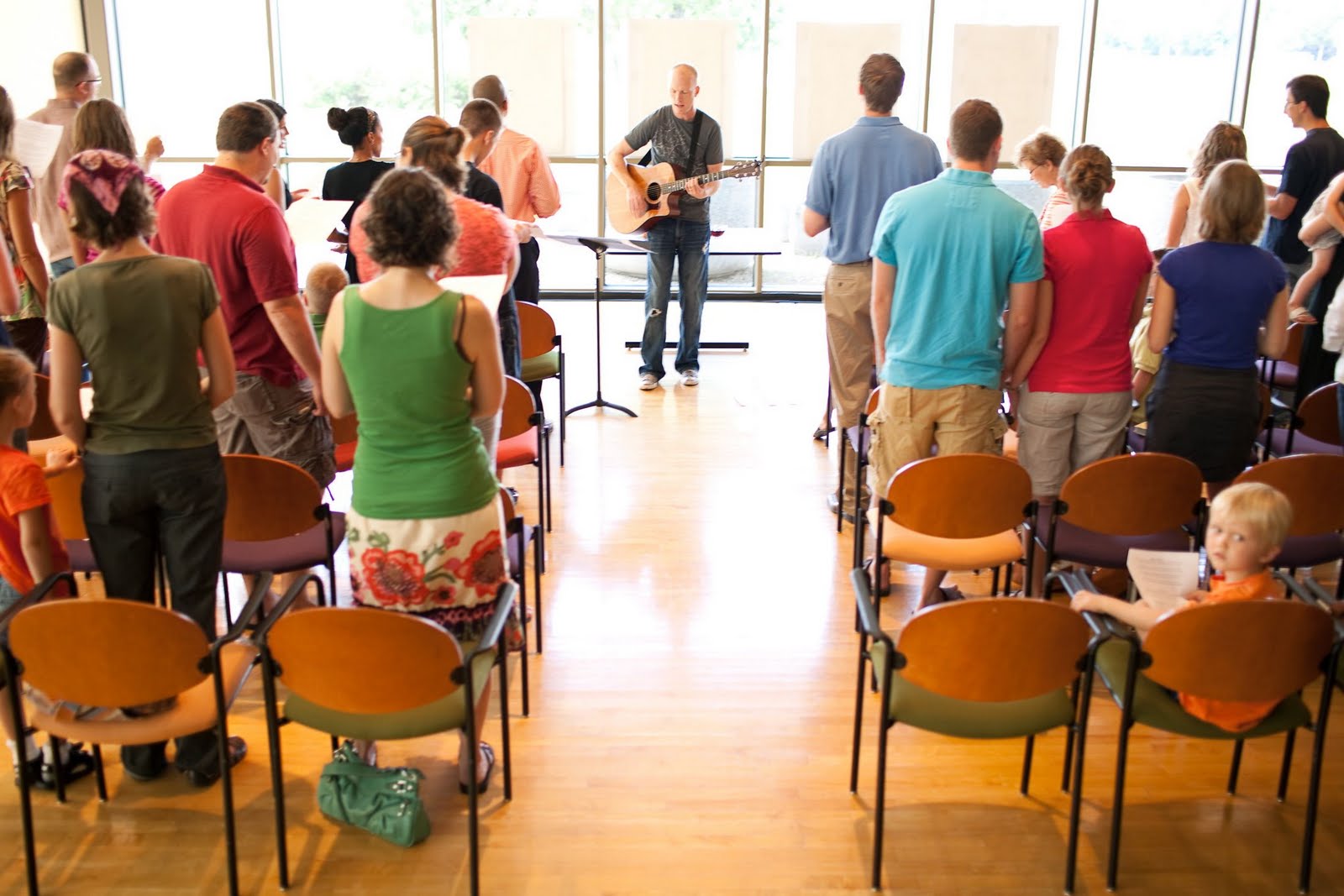


Monday, July 19, 2010
Exciting Day at The Vine
Today at The Vine we had our second and final morning gathering with our core team of four families. This evening we followed with our final social and informational meeting for those interested in joining The Vine. Below are a few pics from both events. Next week we will start gathering together on Sunday mornings (location TBA) and we'll be launching our City Groups in September. Things are rolling forward and we're delighted, by God's grace, to be along for the ride. We appreciate your prayers!


Tuesday, June 08, 2010
New Vine Site
We recently launched our new church website for those in the community of Madison desiring to learn more about The Vine Church. Be sure to take a few minutes to check it out. On it we will be regularly posting information regarding upcoming events related to the church. We are deeply indebted to Dan Van Oss for graciously volunteering his time to design this site for us.


Parkview Commissioning
Parkview Church has been an amazing church home for us over the last eleven years. We have learned so much and grown to love the people as our own family. Though we miss Iowa City and Parkview, we appreciate that they are continuing to play a strategic role in our support and encouragement. The following is the video of of our prayer commissioning in the 3rd service on May 30. Needless to say, this was very meaningful to me and Nate as we prepared to plant The Vine Church. If you don’t see the video below, you can view it here.
Why Plant with the EFCA?
Several weeks ago I wrote a blog post on our Vine Church support site regarding why we are excited to have our church plant in Madison associated with the Evangelical Free Church of America. Yesterday that post was republished as the featured story on the Reach National website of the EFCA. You can read the post here.


Wednesday, April 07, 2010
Jesus, Leadership, Tri-perspectivalism
A lot of guys these days talk about the offices of Christ as seen in the scriptures and how these offices are reflected in the church. These offices of Christ are prophet, priest, and king. The term for this construct that was coined by theologian John Frame is "tri-perspectivalism."
This tool has been very helpful in understanding the different styles of leadership within the church. One example in our church planting team (The Vine Church in Madison) is that I am predominately King, Zach prophet, and Nate priest. As with any assessment tool, every individual has a mixture of qualities from the numerous categories. Nonetheless, this can be a helpful tool when it comes to understanding our strengths and weaknesses, as well as surrounding us with people who are complimentary in gift and ability. This is one of the reasons the body of Christ requires a diversity of gifts to be healthy and why the church is best lead by a plurality of elders.
Here's a helpful chart that clarifies tri-perspectivalism in leadership. Here are some resources from Timmy Brister on the topic.
(HT: JTaylor)
Tuesday, March 30, 2010
Verizon iPhone
Is Verzon getting the iPhone? I've been asking that question for years. When I become a church planter I will be losing access to our Blackberry Enterprise Server meaning I'm either heading to Google's Droid phone or the iPhone. Here's the latest news which originated from the Wall Street Journal. If this is legit, I'm going to be a very happy camper.
If you are reading this on Facebook, you can watch the Fox Business report here.
If you are reading this on Facebook, you can watch the Fox Business report here.
Thursday, March 11, 2010
10 Things That Drive Me Crazy About Working for a Church
No, this is not my list, but it is Tim Schraeder's list. Tim is a communications guru at Park Church in Chicago. I've worked in churches for a little over 15 years and think he's got some observations worth noting.
Here’s 10 Things That Drive Me Crazy About Working for a Church
1. We are really good at burning people out.
For some reason we feel like working long hours against ridiculous timelines and neglecting our personal lives, health, or families is a good idea… as long as it’s for God.
Not so much.
The average church employee stays at a church for about 2 years before they peace out.
“It doesn’t pay to be a workaholic. Instead of getting more done and being on top of your game, you actually start a chain reaction that results in decreased productivity, poor morale, and lazy decisions." And don’t forget the inevitable crash that’ll hit you soon enough.”
We all need to learn one simple word: NO. Even though something may be for a great cause, it’s not worth losing your soul to make it happen.
2. We focus way too much on what we don’t have.
One of the most common complaints I hear from church staff members has something to do with what they don’t have.
In the Gospel account of the feeding of the 5,000 all they had to start with was 5 loves and 2 fish, but in the end, there was more than enough.
“Constraints are advantages in disguise. Limited resources force you to make do with what you’ve got. There’s no room for waste. And that forces you to be creative.”
Celebrate simplicity. Remember God can take nothing and make it into something.
3. We are afraid of change.
I guarantee we’ve all been a meeting where the phrase, “well we heard people say _____________ about _____________….”
Fill in the blanks… the music was too loud, they didn’t like that message, they don’t like this, they don’t like that…
These conversations usually center on a sensitive topic in the church: change.
And how do we respond? We quickly turn down the volume, change our minds, or reverse a decision.
“Sometimes you need to go ahead with a decision you believe in, even if it’s unpopular… remember negative reactions are almost always louder and more passionate than positive ones… so when people complain… let them know you’re listening. Show them you’re aware of what they’re saying. But explain that you’re going to let it go for awhile and see what happens.”
Give change time and be more concerned with what the voice of God is saying to you and let that influence you more than the voices of other people.
4. We use “let me pray about it” as an excuse to get out of making decisions.
I absolutely believe it’s important to pray about major decisions that impact the life of the Church – we shouldn’t move unless we feel God leading us. But all too often we use the “let me pray about that” card to delay simple decisions.
“Whenever you can, swap “Let’s [pray] about it” for “Let’s decide on it.” Commit to making decisions. You’re as likely to make a great call today as you are tomorrow. Don’t make things worse by overanalyzing and delaying before you even get going.”
Pray about what’s important but don’t sweat the small stuff… just make the call and ask for forgiveness later if need be.
5. We LOVE meetings.
For some reason we love meetings. Planning meetings, prayer meetings, planning meetings for prayer meetings. I feel like we have entirely too many and lose valuable time we could be devoting to things that matter.
“Meetings are toxic. If it only takes seven minutes to meet a meeting’s goal, then that’s all the time you should spend. Don’t stretch seven into thirty. Think about the time you’re actually losing and ask yourself if it’s really worth it."
What’s one meeting you could condense or remove from your schedule? DO IT!
6. We try to do way too much.
Most churches are hyperactive and never sleep. We thrive on activity. The whole “less is more” thing hasn’t sunk in yet.
What if we focused on doing a few things REALLY well l instead of doing a million things half-aced? << that’s my PG version
"Cut your ambition in half. Lots of things get better as they get shorter. Getting to great starts by cutting out stuff that’s merely good.”
What are some good things you’re doing that could be sacrificed for great things that will make a greater impact?
7. We try to be something we’re not.
If I see one more 40somethings pastor dressed in Abercrombie so help me…
Ok, but for real… not just pastors but churches in general tend to have a problem of trying to be something they’re not.
"Don’t be afraid to show your flaws. Imperfections are real and people respond to real. There’s a beauty to imperfection. So talk like you really talk. Reveal things that others are unwilling to discuss. Be upfront about your shortcomings. It’s OK if it’s not perfect. You might not seem professional, but you will seem a lot more genuine.”
BE YOU!
8. We spend too much time looking at other churches.
We spend way too much time looking at what other churches are doing, be it a church across the country or the church across town. It’s great to watch and learn from others’ successes, but if you look at other churches as you competition your focus is waaaay off.
“Focus on competitors too much and you will wind up diluting your own vision. Your chances of coming up with something fresh go way down when you keep feeding your brain other people’s ideas. You become reactionary instead of visionary.”
Your church has a unique and specific role it’s meant to play in the life of your community. If your church ceased to exist, what would people miss? Whatever that is should be where you focus your time and energy.
9. We worry about people leaving.
We’re quick to cater to the needs [or demands] of people who have been around for a while instead of focusing the needs of people who are new.
We should spend more time figuring out how to create a wider front door instead of focusing on how
we can “close the back door”… even if that means losing people who give us a lot of money [there, I said it].
“Scaring away new [people] is worse than losing old [ones]. Make sure you make it easy for [new] people to get on board. That’s where your continued growth potential lies. People and situations change. You can’t be everything to everyone. [Churches] need to be true to a type of [person] than a specific [person] with changing needs.”
10. We don’t feel trusted.
For whatever reason churches tend thrive in a weird culture of mistrust. It’s not or conducive to a positive working environment. Some churches have crazy rules, policies and procedures that create layers of red tape that, while probably well-intentioned, communicate a lack of trust.
“When you treat people like children, you get children’s work. Yet that’s exactly how a lot of companies treat their employees. When everything constantly needs approval, you create a culture of nonthinkers. You create a boss-versus-worker relationship that screams, ‘I don’t trust you.’”
This is one I don’t have a quick answer to but know it’s something I’ve experienced and something I hear about consistently from others who are in the trenches. BUT, I will say working in a church that has a trusting environment, I’ve never felt so empowered to do my job and that has fueled my productivity exponentially.
Here’s 10 Things That Drive Me Crazy About Working for a Church
1. We are really good at burning people out.
For some reason we feel like working long hours against ridiculous timelines and neglecting our personal lives, health, or families is a good idea… as long as it’s for God.
Not so much.
The average church employee stays at a church for about 2 years before they peace out.
“It doesn’t pay to be a workaholic. Instead of getting more done and being on top of your game, you actually start a chain reaction that results in decreased productivity, poor morale, and lazy decisions." And don’t forget the inevitable crash that’ll hit you soon enough.”
We all need to learn one simple word: NO. Even though something may be for a great cause, it’s not worth losing your soul to make it happen.
2. We focus way too much on what we don’t have.
One of the most common complaints I hear from church staff members has something to do with what they don’t have.
In the Gospel account of the feeding of the 5,000 all they had to start with was 5 loves and 2 fish, but in the end, there was more than enough.
“Constraints are advantages in disguise. Limited resources force you to make do with what you’ve got. There’s no room for waste. And that forces you to be creative.”
Celebrate simplicity. Remember God can take nothing and make it into something.
3. We are afraid of change.
I guarantee we’ve all been a meeting where the phrase, “well we heard people say _____________ about _____________….”
Fill in the blanks… the music was too loud, they didn’t like that message, they don’t like this, they don’t like that…
These conversations usually center on a sensitive topic in the church: change.
And how do we respond? We quickly turn down the volume, change our minds, or reverse a decision.
“Sometimes you need to go ahead with a decision you believe in, even if it’s unpopular… remember negative reactions are almost always louder and more passionate than positive ones… so when people complain… let them know you’re listening. Show them you’re aware of what they’re saying. But explain that you’re going to let it go for awhile and see what happens.”
Give change time and be more concerned with what the voice of God is saying to you and let that influence you more than the voices of other people.
4. We use “let me pray about it” as an excuse to get out of making decisions.
I absolutely believe it’s important to pray about major decisions that impact the life of the Church – we shouldn’t move unless we feel God leading us. But all too often we use the “let me pray about that” card to delay simple decisions.
“Whenever you can, swap “Let’s [pray] about it” for “Let’s decide on it.” Commit to making decisions. You’re as likely to make a great call today as you are tomorrow. Don’t make things worse by overanalyzing and delaying before you even get going.”
Pray about what’s important but don’t sweat the small stuff… just make the call and ask for forgiveness later if need be.
5. We LOVE meetings.
For some reason we love meetings. Planning meetings, prayer meetings, planning meetings for prayer meetings. I feel like we have entirely too many and lose valuable time we could be devoting to things that matter.
“Meetings are toxic. If it only takes seven minutes to meet a meeting’s goal, then that’s all the time you should spend. Don’t stretch seven into thirty. Think about the time you’re actually losing and ask yourself if it’s really worth it."
What’s one meeting you could condense or remove from your schedule? DO IT!
6. We try to do way too much.
Most churches are hyperactive and never sleep. We thrive on activity. The whole “less is more” thing hasn’t sunk in yet.
What if we focused on doing a few things REALLY well l instead of doing a million things half-aced? << that’s my PG version
"Cut your ambition in half. Lots of things get better as they get shorter. Getting to great starts by cutting out stuff that’s merely good.”
What are some good things you’re doing that could be sacrificed for great things that will make a greater impact?
7. We try to be something we’re not.
If I see one more 40somethings pastor dressed in Abercrombie so help me…
Ok, but for real… not just pastors but churches in general tend to have a problem of trying to be something they’re not.
"Don’t be afraid to show your flaws. Imperfections are real and people respond to real. There’s a beauty to imperfection. So talk like you really talk. Reveal things that others are unwilling to discuss. Be upfront about your shortcomings. It’s OK if it’s not perfect. You might not seem professional, but you will seem a lot more genuine.”
BE YOU!
8. We spend too much time looking at other churches.
We spend way too much time looking at what other churches are doing, be it a church across the country or the church across town. It’s great to watch and learn from others’ successes, but if you look at other churches as you competition your focus is waaaay off.
“Focus on competitors too much and you will wind up diluting your own vision. Your chances of coming up with something fresh go way down when you keep feeding your brain other people’s ideas. You become reactionary instead of visionary.”
Your church has a unique and specific role it’s meant to play in the life of your community. If your church ceased to exist, what would people miss? Whatever that is should be where you focus your time and energy.
9. We worry about people leaving.
We’re quick to cater to the needs [or demands] of people who have been around for a while instead of focusing the needs of people who are new.
We should spend more time figuring out how to create a wider front door instead of focusing on how
we can “close the back door”… even if that means losing people who give us a lot of money [there, I said it].
“Scaring away new [people] is worse than losing old [ones]. Make sure you make it easy for [new] people to get on board. That’s where your continued growth potential lies. People and situations change. You can’t be everything to everyone. [Churches] need to be true to a type of [person] than a specific [person] with changing needs.”
10. We don’t feel trusted.
For whatever reason churches tend thrive in a weird culture of mistrust. It’s not or conducive to a positive working environment. Some churches have crazy rules, policies and procedures that create layers of red tape that, while probably well-intentioned, communicate a lack of trust.
“When you treat people like children, you get children’s work. Yet that’s exactly how a lot of companies treat their employees. When everything constantly needs approval, you create a culture of nonthinkers. You create a boss-versus-worker relationship that screams, ‘I don’t trust you.’”
This is one I don’t have a quick answer to but know it’s something I’ve experienced and something I hear about consistently from others who are in the trenches. BUT, I will say working in a church that has a trusting environment, I’ve never felt so empowered to do my job and that has fueled my productivity exponentially.
Monday, March 01, 2010
L.A. Collaboration
Thanks to Kent Keating and Kristen Kufeldt for organizing the L.A. Collaboration concert with Parkview's choir and orchestra. Here's a pic from the event:

For more information on the L.A. Collaboration, check out there website here. Thanks also goes to Duane and Alex. They are talented artists with a great heart to bring quality music to the church.

For more information on the L.A. Collaboration, check out there website here. Thanks also goes to Duane and Alex. They are talented artists with a great heart to bring quality music to the church.
The Best is Yet to Come
All I can say is my wife REALLY want's an iPad. Not sure what she'll think of the iBoard or iMat.


Subscribe to:
Posts (Atom)